Method
Ruunu keeps kitchen cultures legible.
This register is edited for readers who want fermentation to feel less mysterious without flattening it into rigid recipes. Each note pays attention to what a home kitchen can actually track: weight, salt, temperature, pressure, smell, texture, taste, and the moment a jar should leave the counter.
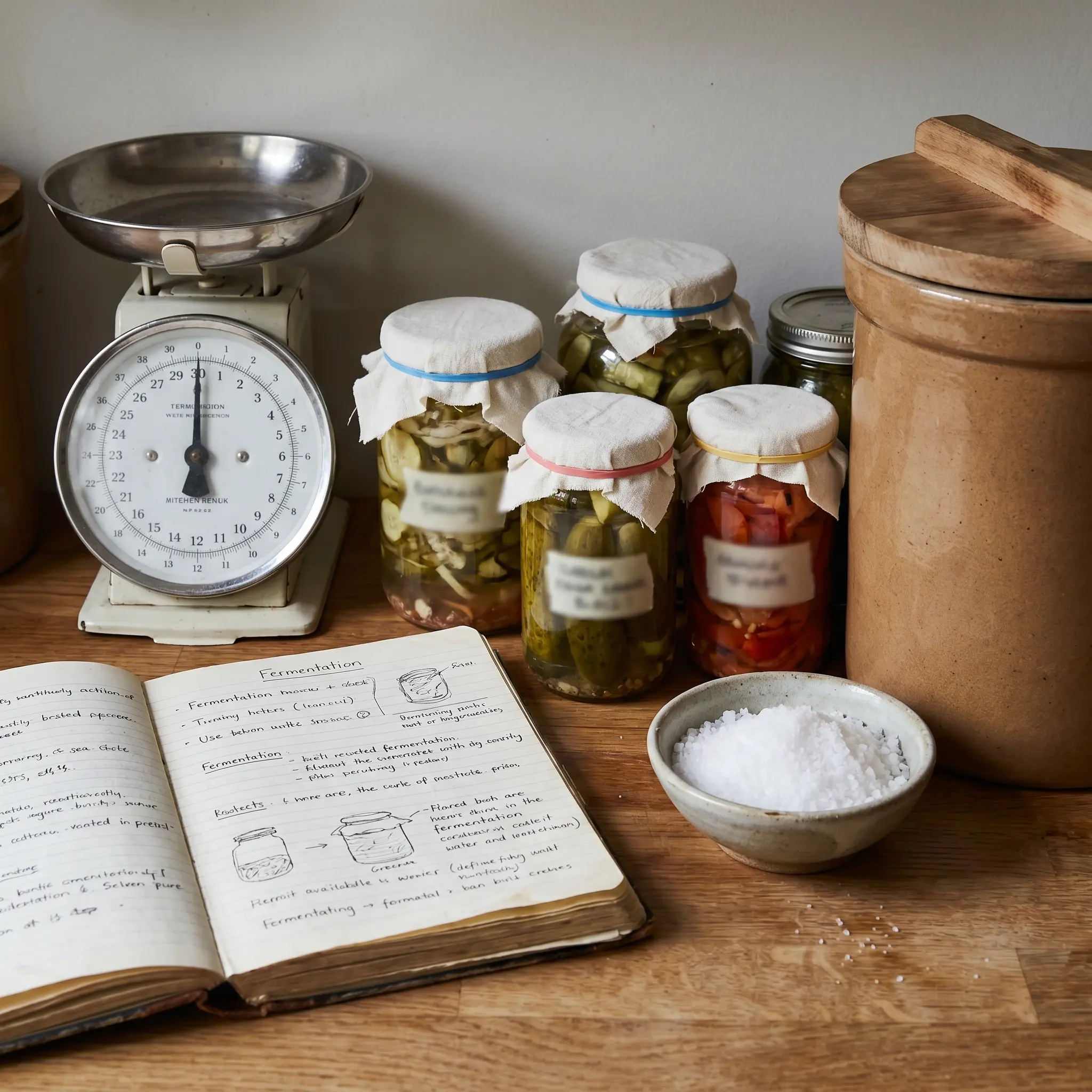
Observation before advice
A batch note starts with visible and sensory evidence. Cloudiness, gas, aroma, surface condition, and texture come before confident recommendations.
Repeatable but not rigid
Ferments vary by room, vegetable, salt, jar size, and season. Ruunu records ranges and checkpoints so readers can adapt without guessing blindly.
Storage is part of flavor
Cold time, pressure release, and serving rhythm change the final jar. The register follows the batch after the first satisfying taste.
Editorial standard
Ruunu is not a recipe blog, a laboratory manual, or a performance journal. It sits between those forms. The writing is practical enough for someone with a jar on the counter, but careful enough to preserve context: which cue mattered, which variable was uncertain, and which result should not be repeated.
The site favors compact entries, glossaries, and operating notes over long anecdote. A useful fermentation page should let a reader compare their own jar with the described batch and decide whether to wait, taste, vent, chill, discard, or repeat with a changed ratio.
Suggestions and corrections are welcome through the contact form, especially when they clarify safety language, storage practice, or cultural context around a fermented food.